
Everyone in the SEO community is trying to crack the same code: How do you actually show up in AI Overviews, AI Mode, and LLMs like ChatGPT?
There’s no shortage of GEO tactics floating around. Content chunking, llm.txt, schema markup, entity optimization, you name it.
But there’s one strategy most SEOs overlook: content gap analysis.
It’s a smart way to improve and optimize your content based on what’s already ranking in AI-generated answers.
Why perform a content gap analysis now?
Generative AI engines work differently than traditional search engines. Rather than evaluating pages against individual keywords, they break a single query into multiple related sub-queries through a process known as query fan-out.
If your content only covers one part of the topic, you might still rank in Google for that specific keyword or term. But you’re unlikely to be cited when an AI system constructs a complete answer.
This is where a content gap analysis becomes crucial in the age of AI search.
For every piece of content on your site, a gap analysis allows you to ask three diagnostic questions:
- What is the main entity this page is about?
- What question does it answer?
- And what related questions is it missing?
Those missing questions are your gaps and they’re exactly what AI systems are scanning for when deciding whether to treat your content as a complete, authoritative source on a topic.
When you cover a topic thoroughly across all of its fan-out queries, LLMs are more likely to cite your content in their answers.
In fact, a study by Surfer SEO found that ranking for multiple fan-out queries dramatically increases your chances of getting AI Overview citations.
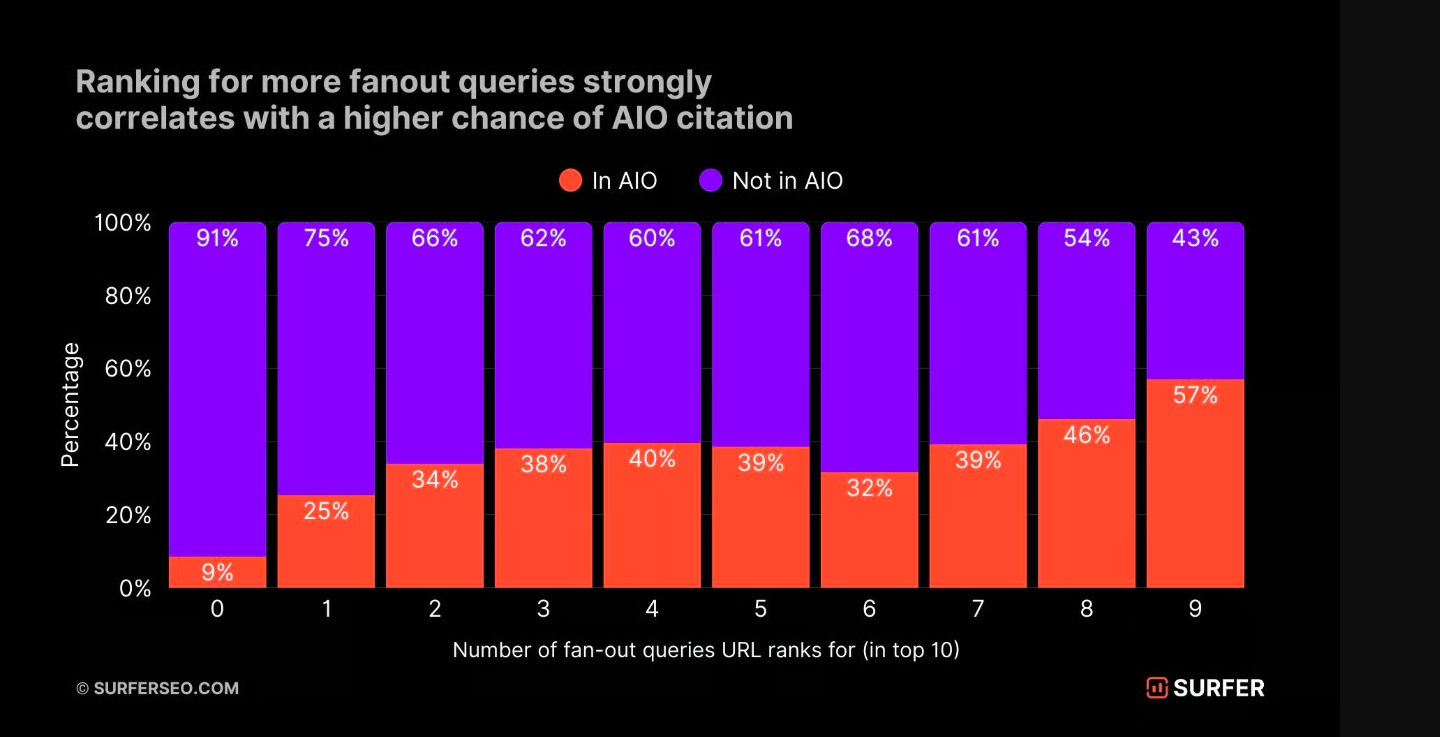
Image source: Surfer SEO
What makes AI-era content gaps different from traditional keyword gaps?
Traditional keyword gap analysis was straightforward: find keywords that competitors rank for, then create new content or expand existing ones to close the gaps.
AI-era content gap analysis runs deeper. You’re not just looking for individual keywords anymore. You’re looking for missing pieces of topical authority.
AI systems evaluate whether you’ve covered:
- The full range of what users actually want to know about a topic
- Related concepts and entities that demonstrate expertise
- Different angles and use cases people need
- Supporting subtopics that complete answers require
The difference: ranking isn’t the end goal anymore. Being cited and mentioned in AI-generated answers is.
And content gap analysis is a good way to get there.
How to perform a content gap analysis
As an SEO agency founder, I’ve run dozens of content gap analyses for my clients.
Here are different methods I’ve used (and refined) across various client campaigns.
Conduct competitor analysis
Remember how we analyzed the top-ranking pages in Google, so we can produce better content and outrank them?
Well, the same principle applies here.
If you want to improve your AI visibility, start by gathering the top-cited domains in your space—these are the sources AI systems already trust when generating answers.
You can do this manually by entering prompts in AI models and tracking which sites get cited. Or use AI prompt tracking tools to do the heavy lifting.
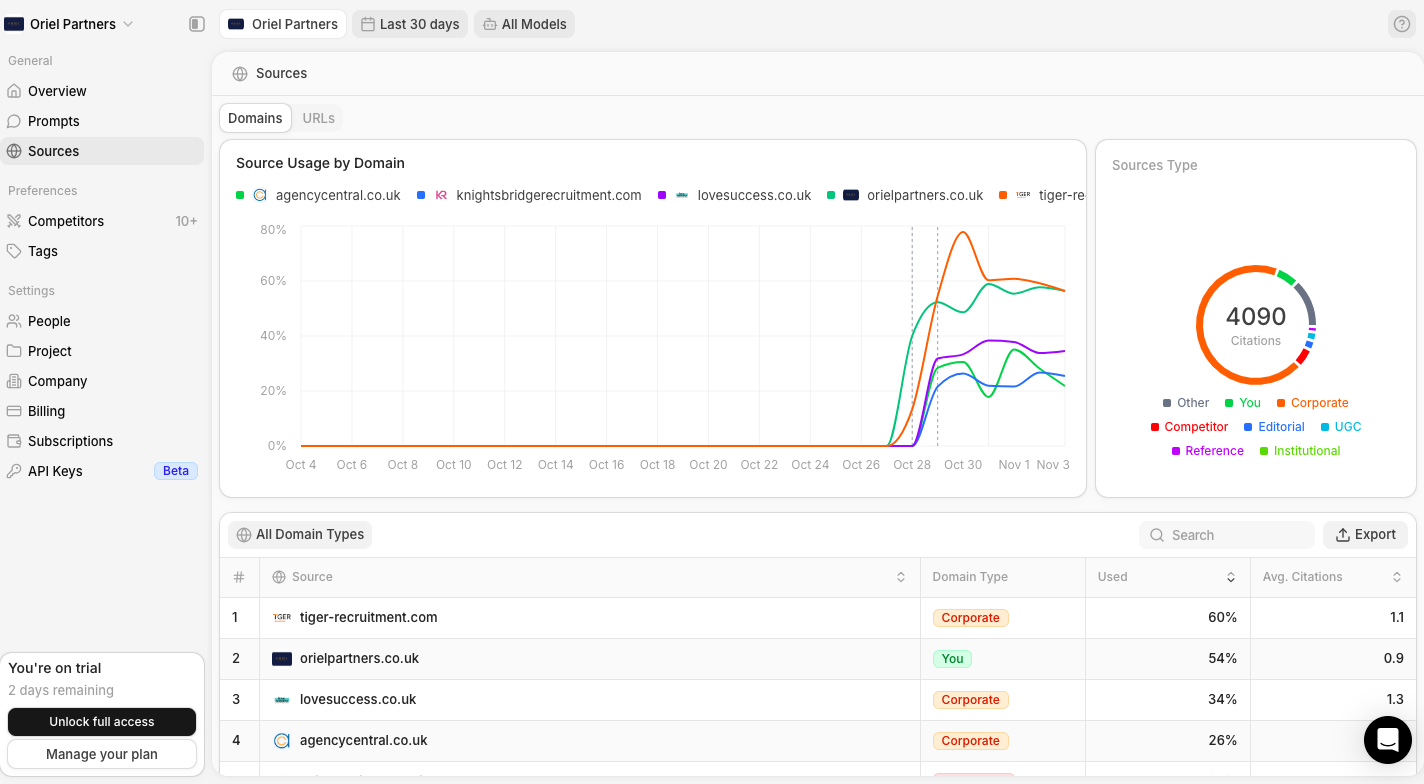
Note that these AI tracking tools use synthetic prompts, which doesn’t reflect real user queries. Still, it will give you a good idea of what domains are frequently used as LLM sources in your specific niche.
Once you’ve identified your top-performing competitors, analyze their overall content strategy to find gaps you could fill:
- What topics have they covered that you haven’t? Look at their site structure, blog categories, and content hubs. Are there entire topic areas they’ve built out that you’re missing?
- What questions are they answering? Check the headings and FAQs on their ranking pages. Are there common questions you haven’t addressed?
- What areas to improve? This is the opportunity. Maybe they’ve covered the basics but missed advanced use cases. Or they’ve written about the “what” but not the “how.” Those gaps are yours to claim.
Research user questions
Another way to find topic opportunities is to go straight to the source: What are people actually asking?
AI systems prioritize content that directly answers user questions. So if you can identify the questions your audience is asking—and competitors aren’t answering well—you’ve found your opening.
Here’s where to look:
- SERP features: Look at Google autocompletes, People Also Ask, and related searches for your target keywords.
- Reddit, Quora, and industry forums: Search your core topics and read through the threads. What questions keep coming up? What do people still seem confused about? These are real problems your content could solve.
- Customer support tickets and sales calls: Your team hears the same questions repeatedly. Pull the most common ones. If prospects and customers are asking, searchers are too.
These information sources can reveal the broader context around your target topics and the questions and subtopics that users frequently explore alongside it.
This is the approach I used for my client Oriel Partners. When updating one of their blog posts, we added new subtopics and FAQs based on real user questions.
When we checked the result six months later, the content managed to secure AI Overviews citations for 17 keywords.
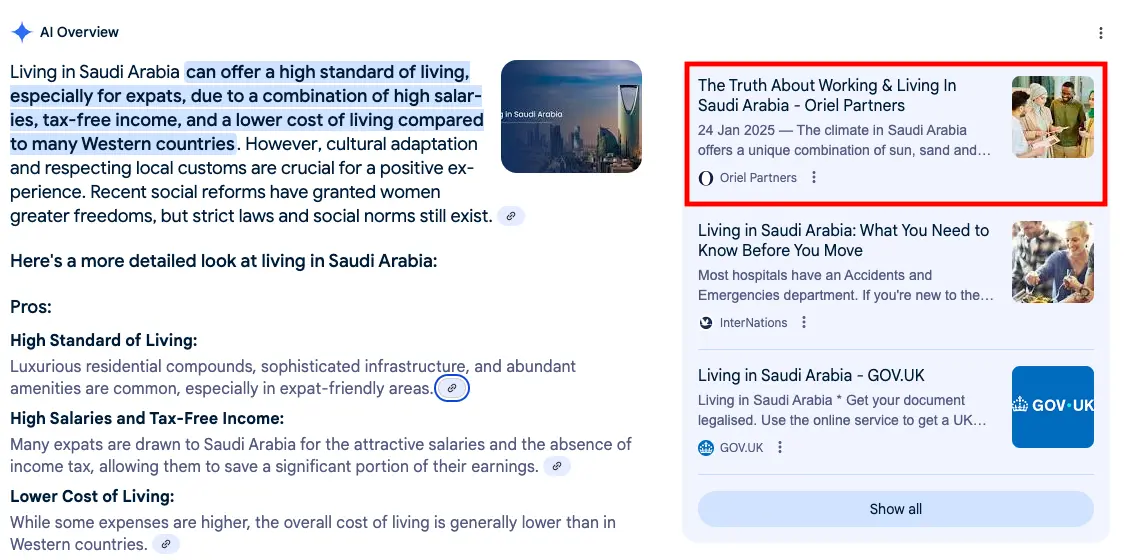
Image source: Position Digital
Reverse engineer query fan-out
If you want to get cited by AI Overviews, AI Mode, and LLMs like ChatGPT, you need to understand how they think.
By reverse-engineering the background searches AI runs when answering a question, you can identify the subtopics and contextual signals they expect, and then optimize your content to meet those expectations.
You can approach this in two ways:
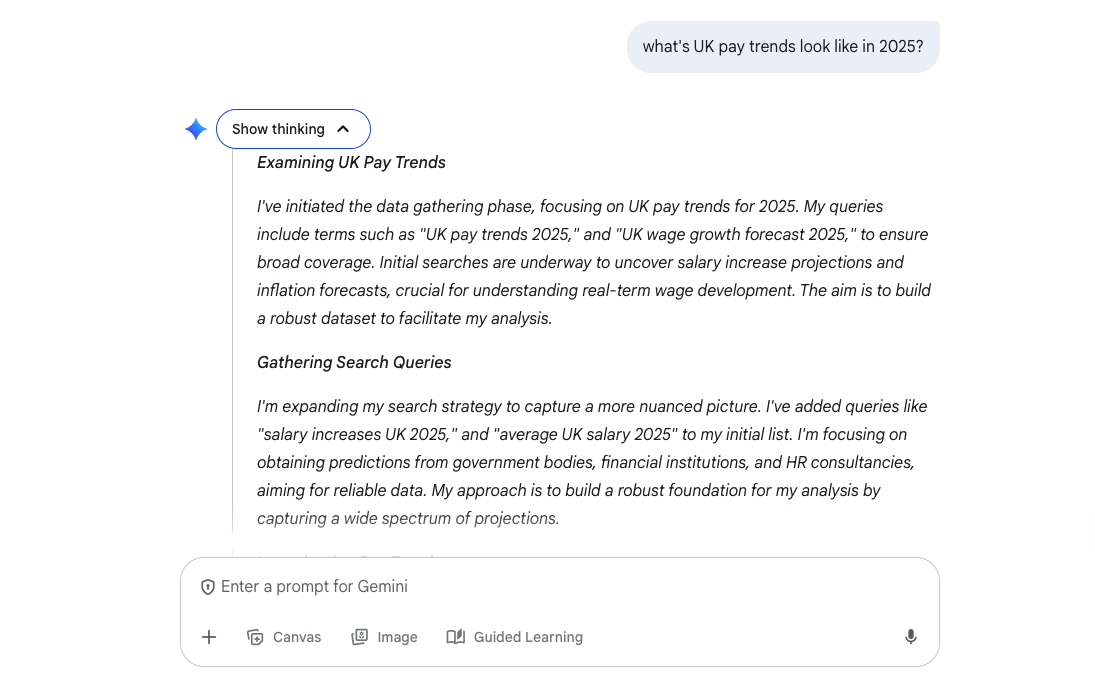
- Use tools like Position Digital’s Query Fan-Out Extractor to uncover internal search queries AI models generate to gather information.
- Manually test prompts in LLMs by entering a question and observing how the model expands on it. In Gemini, for example, you can click “Show thinking” to see their exact thought process. Make sure to use the incognito mode to reduce bias.
Conduct entity gap analysis
An entity is a concept that can be identified, described, and connected to other concepts regardless of language, such as people (Bill Gates), locations (Paris), and brands (Zapier).
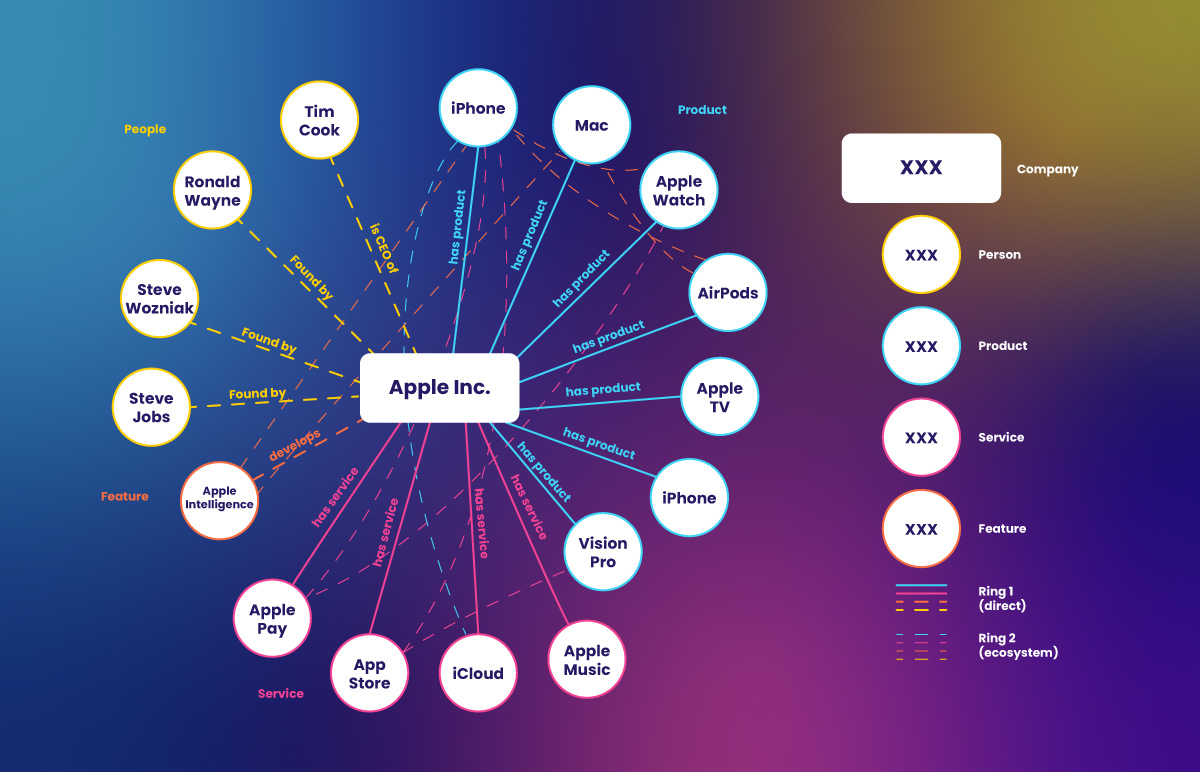
Example knowledge graph for Apple
In a Grade.us interview, veteran SEO Bill Slawski explained why entity optimization is crucial for SEO:
“Entities are important because they help search engines understand what a page is about, beyond just matching keywords. They provide context, and that context can make a difference in how a page is ranked or whether it appears as a knowledge panel or in rich results.”
In AI-driven search, entity optimization becomes more important because AI-powered search systems build their understanding of a topic by identifying entities on a page and analyzing how those entities relate to one another across the wider web.
If your content consistently mentions the right entities in the right context, AI systems can more easily determine:
- What your page is about
- How deep your expertise goes
- Whether your content can be trusted as an authoritative source
You can run an entity analysis audit using NLP frameworks such as spaCy or Google’s Natural Language API, or through semantic SEO platforms that surface and map entities across your content.
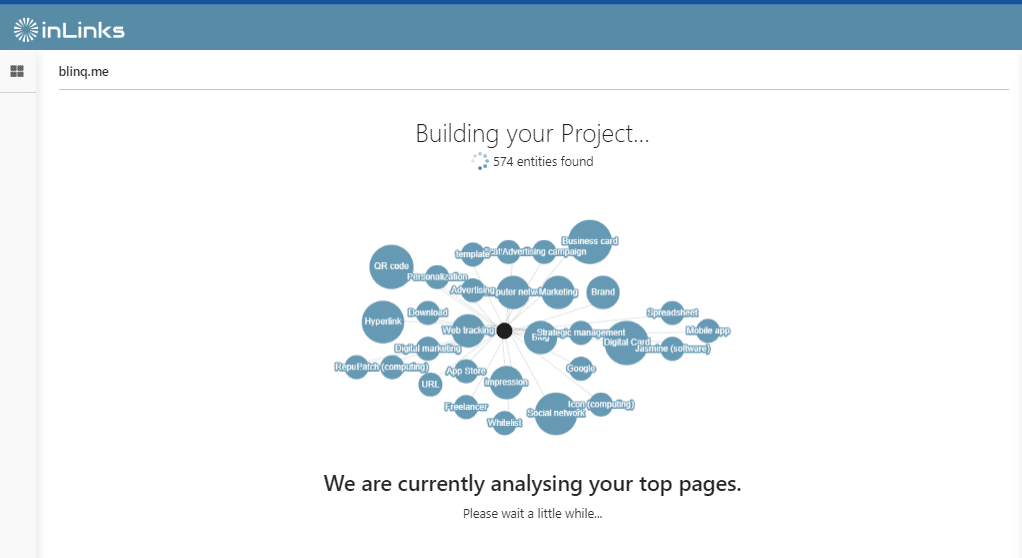
Compare the semantic entities covered on your competitors’ top pages to yours. Check if missing entities represent:
- Related concepts you should explain
- Use cases or applications you haven’t covered
- Industry terminology or jargon your content lacks
Then, update your content to include and contextualize those entities using schema markup.
Overlay with technical SEO insights
At this stage, you may have identified what content is missing and where your topical coverage is weak.
But there’s another layer that often gets overlooked: whether your existing content can actually be discovered, crawled, and interpreted correctly.
Content gaps aren’t always editorial. Sometimes, the content exists, but technical issues prevent search engines and AI systems from seeing it as part of your topical ecosystem.
This is where technical SEO data becomes critical.
Use crawl data to surface hidden content opportunities
By crawling your site with a tool like Oncrawl, you can uncover technical signals that directly point to content opportunities, such as:
- Pages that aren’t crawled or indexed properly: If key content isn’t being crawled, it won’t contribute to your topical authority, no matter how good it is.
- Thin or underdeveloped pages in strategic topic areas: Oncrawl’s analysis can also surface thin pages across your site, flagging pages with low word counts or weak internal linking, so you can identify which existing pages need depth before investing in new content.
- Orphaned content: Pages with no internal links are effectively invisible to both users and bots, which weakens your overall topical structure.
Identify structural gaps with crawl depth analysis
Crawl depth is one of the fastest ways to spot structural content gaps. Ideally, core topic hubs and cluster pages should be reachable within three clicks or fewer from the homepage.
If your most important topic pages sit at depth 4 or deeper, that’s a strong signal that the topic isn’t structurally prioritized or that internal linking is insufficient.
This is often a sign that your content strategy and site architecture are misaligned and consequently, search engines and AI crawlers may treat it as secondary or low-value.
Analyze bot behavior through log files
Log file analysis adds another layer of insight, especially in the age of AI search. With prompt tracking, simulated queries don’t necessarily provide the full picture. When you add log analysis into the mix, you get real data about what’s actually happening when AI platforms crawl and cite your content.
With Oncrawl’s AI Search Lens, you can see:
- Whether AI crawlers are discovering your content at all
- Which pages are visited most frequently
- Which pages or sections are rarely or never visited
If certain topic clusters receive little to no crawl activity, that’s a strong indicator that those areas aren’t being recognized as important, or aren’t easily accessible.
Now that you have your data, let’s look at how to prioritize and organize it
How to fill your content gaps
Once you’ve identified where your content falls short and where the opportunities lie, it’s time to fill those gaps.
If you haven’t already, now is a good time to create a topic cluster. For each priority theme, you should have a clear pillar page that acts as the hub, supported by subtopic pages that cover the details.
This structure shapes what you update first, what you create next, and how you connect it all through internal links to build topical authority.
From there, filling the gaps usually comes down to two workstreams: optimizing what you already have and creating new content that’s missing.
Optimize existing content
Check whether you have existing pages that already target the terms uncovered in your content gap analysis, but perform poorly.
From there, it’s all about making the right adjustments.
Target the right search intent
Make sure the page aligns with the intent of the target query. If it doesn’t, don’t hesitate to adjust the content format.
For example, if a blog post is ranking for a transactional term, consider repurposing it into a comparison or product page that better matches what the searcher wants.
But be wary, one page can’t cover every type of intent, so try not to stuff it with as much content as possible.
Expand thin pages
Identify pages that rank for important keywords but lack depth. Add missing sections, FAQs, screenshots, or examples so the page fully addresses those queries and related long-tail variations.
Incorporate missing entities
Add relevant brands, tools, people, methodologies, or regulations that your entity gap analysis revealed. This contextual depth helps Google and AI systems recognize your content as comprehensive and authoritative.
Build internal links
Strengthen underperforming pages by linking to them from relevant content within the same cluster. This not only distributes authority but also improves the user journey by connecting related resources.
Create content that completes the buyer journey
The second step is to create new content for queries you haven’t covered yet.
Informational gaps
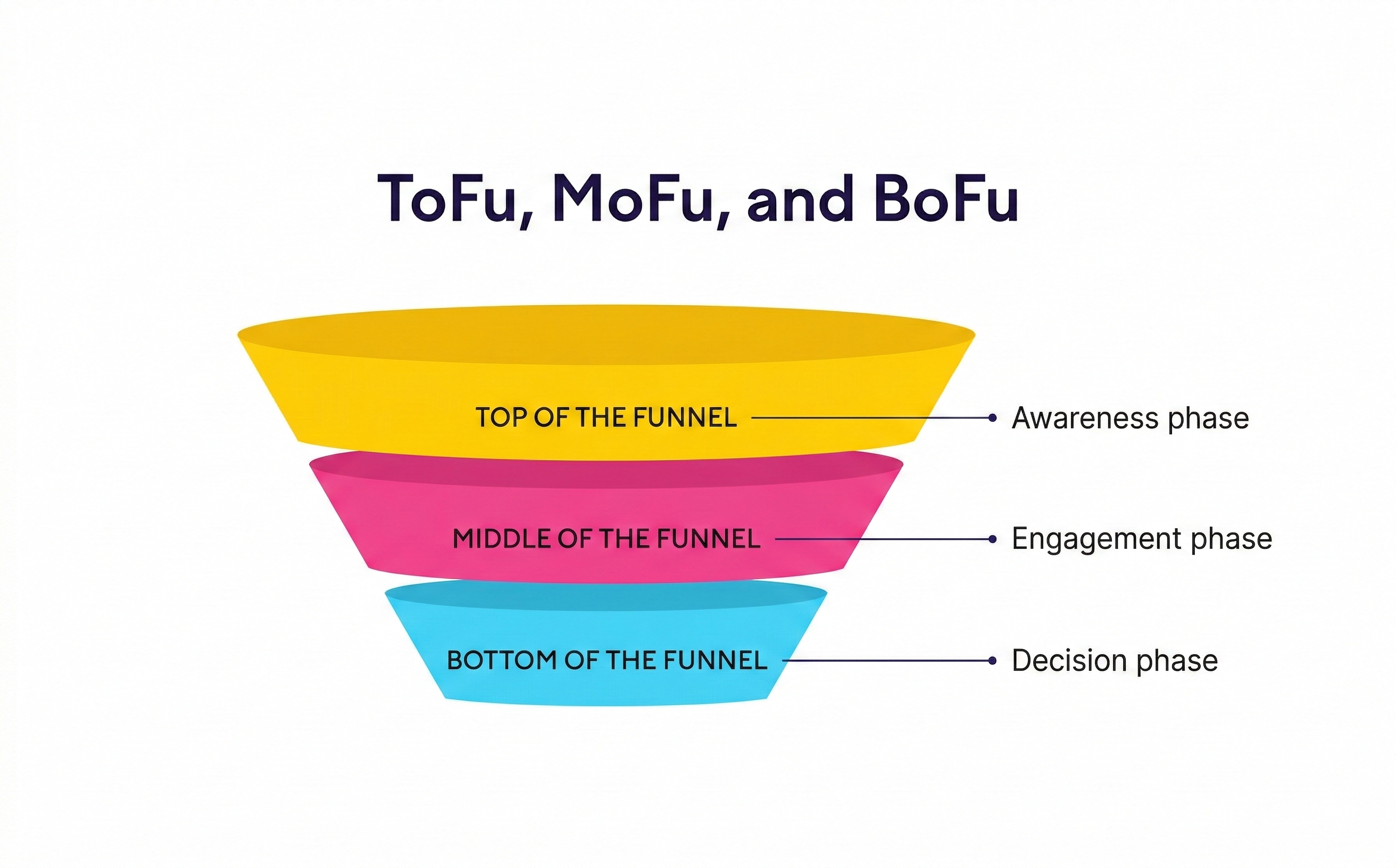
Once you have identified search queries around your products or features using any of the methods suggested above, you can create helpful guides, blog posts, and resources for them. This is crucial for building awareness, capturing early attention, and positioning your brand as a reliable authority.
Navigational gaps
Did your research lead you to any queries where prospects are comparing solutions or searching for specific brands? Fill these gaps with feature pages, product comparisons, or “alternative to” content that demonstrates your unique value and helps buyers evaluate their options.
Transactional gaps
Target high-intent searches with optimized product pages, landing pages, pricing pages, or use case content. This ensures you’re visible at the exact moment prospects are ready to take action.
When you map each gap to a stage in the buyer journey, your content addresses the full funnel from awareness to conversion.
Strengthen internal linking
Internal linking is the connective tissue that turns individual pages into a topical ecosystem.
Once new content is created or existing pages are optimized, reinforce them with strategic internal links:
- Link related content within clusters: Connect supporting articles within the same topic cluster using contextual internal links. When you mention a concept that you’ve covered in depth elsewhere, link to that content.
- Use descriptive anchor text: Avoid generic phrases like “click here” or “read more.” Instead, use anchor text that clearly describes what the linked page covers, incorporating relevant keywords naturally. This helps both users and crawlers understand the relationship between pages.
- Prioritize deep pages: If your crawl analysis revealed important content buried at depth 4+, create internal linking pathways that bring it closer to your homepage. Link to it from higher-authority pages, add it to relevant navigation menus, or feature it in related content sections.
Measuring success
Doing the work is only half the battle, now it’s time to track the payoff.
1. Track rankings alongside crawl data
Looking at rankings in isolation only tells part of the story. To understand why pages perform the way they do, you need to connect search performance with crawlability and site structure.
Tools like Oncrawl allow you to analyze how visibility correlates with factors like crawl depth, internal linking, and indexability.
As you close content gaps, monitor how these signals evolve:
- Are newly created or updated pages being crawled consistently?
- Are gap-filling pages reaching an optimal crawl depth (ideally three clicks or fewer from the homepage)?
- Do pages within strategic topic clusters gain visibility faster than isolated content?
Improvements in rankings paired with healthier crawl metrics are a strong indication that your content is not only relevant, but accessible and structurally sound.
2. Analyze bot behavior changes
Using Oncrawl’s AI bot monitoring dashboards, you can track how search engine and AI crawlers respond as you fill content gaps:
- Increases in crawl frequency for topics you’ve expanded or optimized
- Discovery of newly created pages by Googlebot and AI crawlers
- Shifts in crawl allocation toward high-value content clusters
If bots start crawling your content more frequently after you close gaps, it’s a strong signal that your site is gaining topical importance and authority.
3. Monitor AI visibility
As AI-driven search experiences like Google’s AI Overviews and large language models (LLMs) become more prevalent, it’s essential to monitor your content’s presence in these platforms.
Regularly check your keywords to see if your content appears in Google’s AI Overviews and AI Mode.
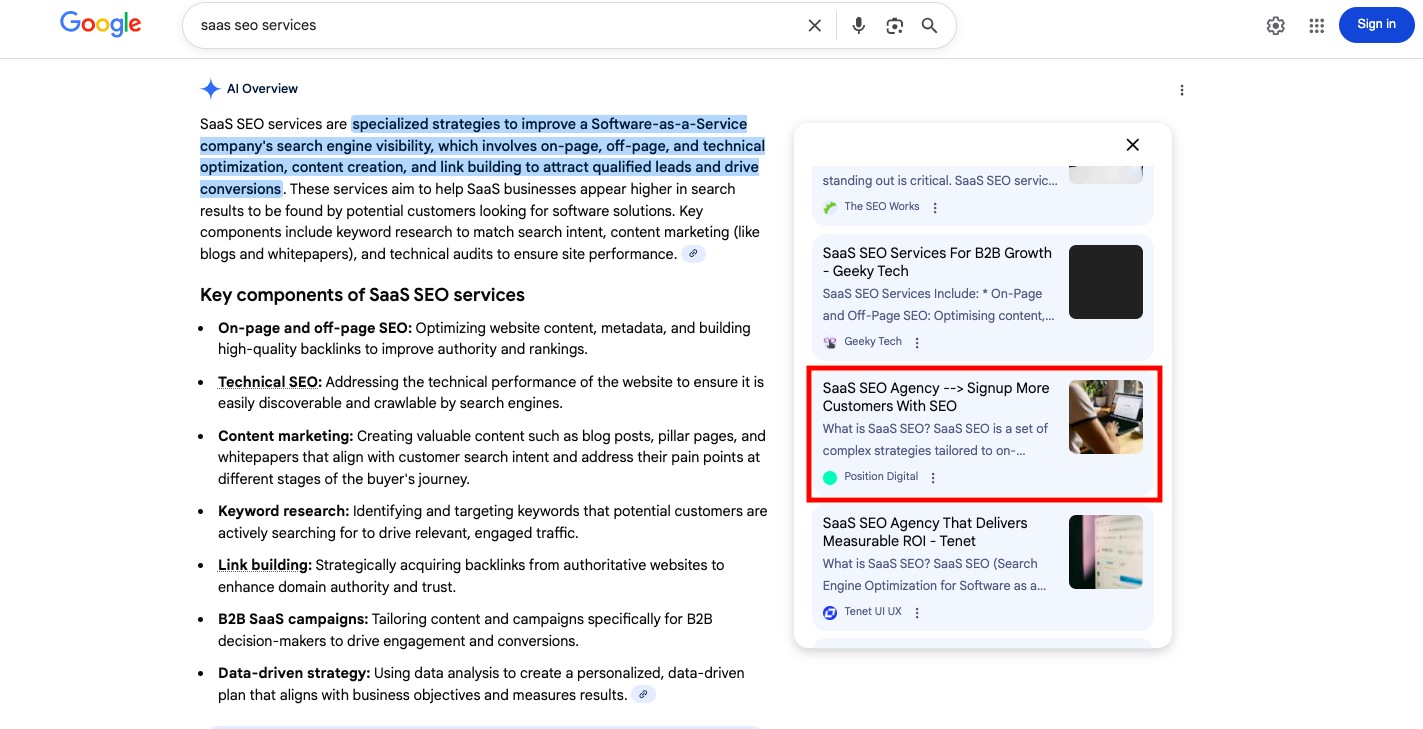
You can also use the AI Search Lens to monitor search visibility performance over time, using real AI usage data. You can track the volume of citations, volume of pages crawled for citations and volume of clicks.
4. Monitor traffic from LLMs
AI visibility means little if it doesn’t translate into visits and pipeline. There are two practical ways to measure whether LLMs are sending traffic:
- Track AI referral traffic in GA4: Create an “AI referrals” view to monitor sessions, landing pages, and conversions from sources like ChatGPT, Perplexity, and Gemini (and any other AI referrers that appear in your data).
- Track branded searches and clicks in Google Search Console: Some people won’t click links directly in AI answers. Instead, they’ll look up your brand name in Google and visit your website directly.
Make your content gap analysis count
The rules of search visibility are changing. It’s not just about ranking anymore; it’s about being selected as the authoritative source for AI-generated answers.
And to do that successfully, one of the things you need is a solid content gap analysis strategy.
Build on your current strategy: find out the topics your competitors are targeting, the questions your customers are asking, and the web searches LLMs are running for the keywords you care about. Then, make sure your content fills those gaps.
Content gap analysis isn’t a one-time exercise. AI systems tend to favor fresh, regularly updated content, so it’s worth scheduling periodic reviews to check whether your gap-filling pages are still accurate, whether new questions have emerged in your space, and whether competitors have moved into your territory.
Once you do that, track your progress to see whether your efforts are paying off, and whether you’re actually gaining visibility in AI-driven search.