
Google is expanding visibility reporting beyond traditional websites with new platform properties for social and video content. For SEO teams, organic visibility is no longer a website-only discipline. It is a distributed one, and the messy middle of the search journey is where that shift becomes visible.
Search has left the search box
One of my posts reached 500 views in the UK and then stopped. Five months later it started picking up an audience in the US, passed 5,000 views, and brought in new followers long after I had written it off.
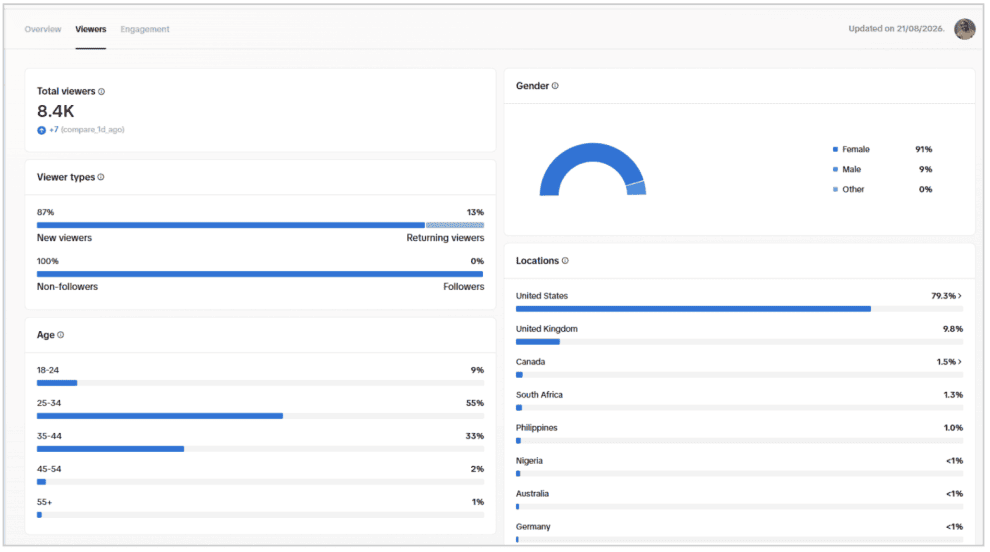
Figure 1: TikTok analytics showing a five-month resurfacing curve
Nothing about that video changed. What changed was where the platform decided it belonged. That is the kind of discovery pattern traditional SEO reporting has never been able to see, and Google has now started building for it.
In July 2026, Google announced the introduction of platform properties, a new Search Console property type designed to help site owners and creators understand how their social and video posts perform on Google Search and Discover.
The shift is already visible in how people search. Sprout Social’s Q2 2025 Pulse Survey found that 41% of Gen Z now turn to social platforms first when looking for information, ahead of traditional search engines at 32%.
Across all age groups, more than one in three consumers prefer to search social media specifically for product reviews and recommendations.
Users increasingly value human-led content: lived experience, community insight and peer recommendation. Reddit, Instagram, YouTube and TikTok all show this in action, and Google has adapted by indexing social content, recognizing that the most relevant answer to a query is not always on a brand’s website.
After a year creating content across TikTok, Instagram and YouTube, I’ve seen how platform-specific behaviours shape discovery.
This article covers what translates from social back into SEO, and why platform properties give us a chance to close the measurement gap across the “messy middle”
Fewer clicks did not remove the messy middle. It moved it.
There’s a reason why word of mouth is the oldest form of marketing. It combines lived experience, usefulness, authority, and trust in a way few other channels can.
Google’s stated approach to search is to deliver the most relevant and reliable information available, which points to a future where search does, at scale, what word of mouth has always done: surface trusted human experience.
User expectations have shifted alongside that. People now expect fuller answers inside the search experience itself, and Google has responded by compressing the journey into the SERP through knowledge panels, featured snippets, AI Overviews and now AI Mode.
Fewer clicks does not remove the messy middle, though. It relocates it. As Google answers more questions directly, discovery, validation and decision-making spread across a wider set of platforms.
The goal is not to win back every lost click. It is to understand how each channel builds confidence along the way, and to be present in the ones that do.
A user researching a product may discover it through TikTok, validate the decision through Reddit discussions, watch a YouTube review, and only then visit the brand website. Each platform plays a different role in moving someone from curiosity to confidence.
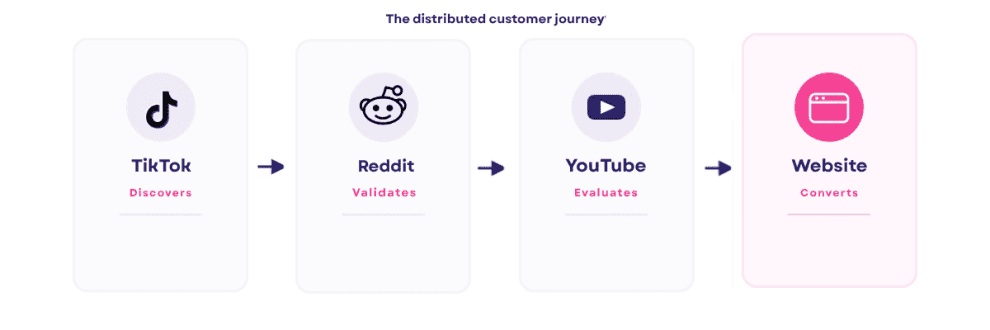
Content lifespan: linear decay vs behavioral redistribution
On social platforms, content does not decay in a straight line. A new post can revive an older one, extending its reach months after it first appeared. Search rewards ongoing optimization while social content thrives on novelty, but the two work together rather than against each other.
On TikTok and YouTube especially, content is redistributed based on behavioral relevance rather than chronological decay. Videos resurface months after posting, which tells you that discovery is dynamic, iterative and audience-driven.
That is what happened with the video I opened with. It reached 500 views in the UK, then gained traction in the US, ultimately passing 5,000 views and generating new followers five months after posting.
The practical lesson: do not delete low-performing posts too early, because redistribution can deliver a delayed but real impact.
It also pays to pivot when the data opens a door. Once that video started gaining traction in the US, the opportunity was to lean into that audience with follow-up content rather than keep targeting the original market. Reading those signals early and changing strategy to match is what turns a lucky resurfacing into a repeatable result.
Publish-and-forget no longer works. The strategies that pay off treat evergreen content as an investment across platforms.
Content clustering, reimagined for a multi-platform world
Content clusters remain a must-have for a strong content strategy on any platform. What has changed is that clustering is no longer limited to webpages and internal linking structures.
How social platforms cluster content
Think of TikTok and Instagram as ecosystems where related content can increasingly find audiences who have shown interest in similar topics. That mirrors what traditional clusters do: help systems understand how topics relate, and connect users to relevant information.
The difference is that social platforms surface these connections dynamically, sometimes before users even search. Used well, that turns social insight into real-time audience research.
Clustering does not stop at publication
On TikTok, one of my viral carousels explaining how I built my credit score generated over 29,000 views.
Rather than treating it as a one-off success, I analyzed audience responses and created two additional carousels based on questions and themes coming from the comments. Those generated an additional 6,000-plus views and 120 new followers within a month.
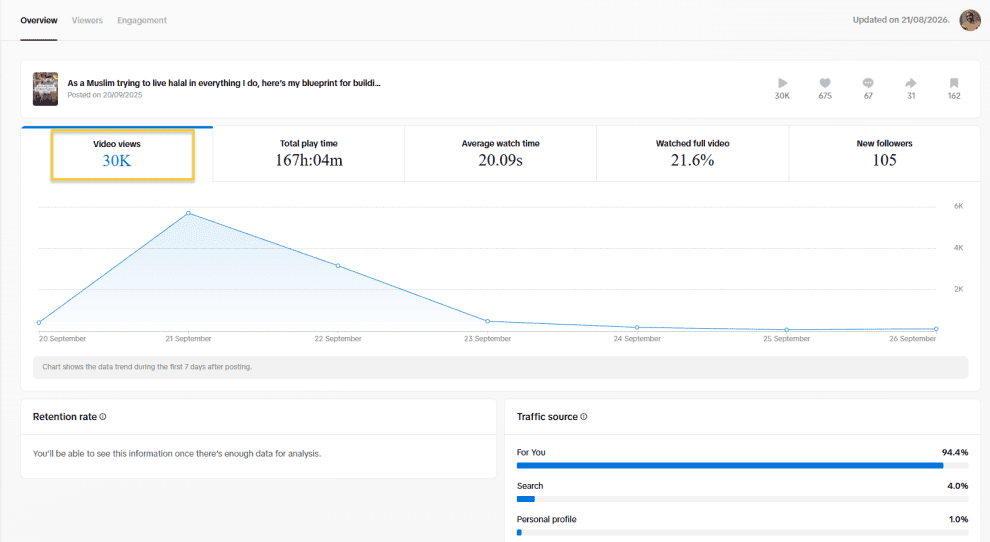
Figure 2: TikTok analytics from viral carousel about credit scores
On Instagram, my first viral Reel reached over 50,000 views. Two follow-up pieces built on the same audience interest took the combined total past 400,000 views, 1,000 followers and 50 email subscribers within 30 days.
Clustering is a way of understanding audience needs, extending content relevance and creating multiple touchpoints across the search journey. But it’s not a one-off exercise and the best opportunities often emerge after publishing.
Comments, questions and engagement reveal where interest is growing, which lets you expand, refine or pivot in response. As AI adoption increases, this iterative approach becomes a practical way to earn more AI mentions and citations.
From EEAT to distributed authority across platforms
In traditional search, E-E-A-T (experience, expertise, authoritativeness and trustworthiness) is strengthened through citations, authorship, mentions, backlinks, reviews, and transparent expertise.
Demonstrating experience where audiences already are
Social platforms give brands and creators additional environments to demonstrate those qualities through lived experience, community participation and audience interaction.
Social engagement does not convert directly into rankings. What it does is let brands build stronger relationships with their audiences and show expertise in the formats where people increasingly look for answers.
Responding to relevant conversations, collaborating with creators, joining discussions, and creating platform-native content like duets and stitches can all expand reach and credibility.
Finding audience overlap
Audience overlap is worth watching. Who shares the interests, challenges, or behaviors of your target audience, and where are those conversations already happening?
Engaging beyond your immediate community lets you join existing conversations instead of broadcasting into a void.
Extending this to digital PR and influencer campaigns
The same principle also extends to influencer campaigns and digital PR. On a pet insurance campaign I led last summer, integrating an influencer’s insight helped the article earn additional journalist coverage and strengthened its wider SEO impact through linked references.
Connecting social insights with website content and broader campaigns helps brands create a feedback loop where audience behavior informs content strategy, and content reinforces authority across multiple channels.
Whether through proactive campaigns, trend monitoring, social listening or newsjacking, authority increasingly comes from demonstrating relevance where audiences are already paying attention.
Measuring visibility when the funnel is distributed
Platform properties matter less as another report to check and more as an acknowledgement that organic visibility now has to be measured across platforms rather than only on your own site.
Why website-only metrics fall short
For years, SEO impact has been evaluated through mostly website-centric metrics: rankings, impressions, clicks and organic traffic. Those are worth following, but they capture only one part of the journey. They measure where users arrive, not always how they discovered, validated and built confidence before getting there.
The messy middle was never the real problem. The problem was measurement frameworks that treated it as a series of disconnected moments instead of one journey.
Auditing your content in batches
Platform Properties should push SEO teams to ask broader questions about how content contributes to that journey. One practical habit is to review your own content in batches.
After collating 10 to 30 of my own posts over three months, I’ve found these diagnostic questions are worth asking:
- Why did this content perform well?
- What are the comments telling us about audience perception?
- Where did viewers drop off?
- How can we improve future posts based on these insights?
Reading platform metrics alongside Search Console
Platform-native metrics such as views, watch time, saves, shares, and engagement reveal how audiences discover, validate and build confidence before they click.
Read alongside Search Console data, they give a fuller picture of the messy middle and the role each touchpoint plays in it.
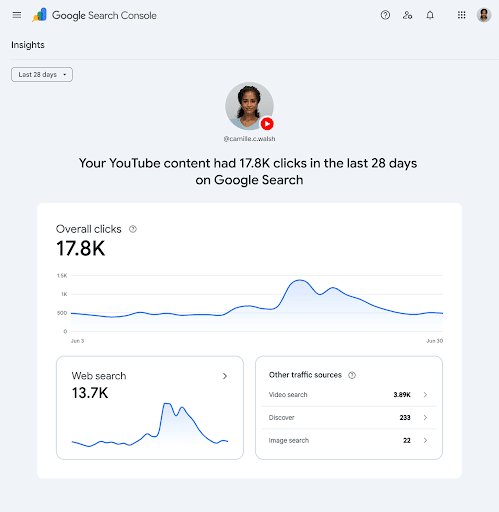
Source: Google Search Central
For example, a TikTok generating high saves and comments around a specific question may reveal an emerging audience need. If Search Console later shows growing impressions for related queries, SEO teams have evidence to expand that topic into a content cluster, strengthen internal linking or support a wider campaign.
Rather than measuring channels independently, the combined data helps explain not just what users searched for, but how they built confidence along the journey.
Connecting website and social performance
The bigger opportunity is to connect website and social performance rather than compare them:
- Can a high-performing TikTok become an evergreen article?
- Can recurring audience questions shape a new content cluster?
- Can social engagement reveal gaps in existing website content?
- Can platform insights strengthen campaigns across PR, SEO and content marketing?
Platform Properties will not answer all of these questions on its own, but it’s an important first step towards closing the gap between fragmented discovery and the way we measure it.
What this means for SEO teams now
If this is where search is heading, four shifts matter most for SEO teams right now:
Treat social platforms as part of the organic visibility surface, not as something separate from SEO.
Social platforms build a real-time picture of the user and adapt to changing behavior, so what they surface is personalized and dynamic rather than one-size-fits-all.
Expect measurement to get better, and prepare for what you will do with it.
As platform properties mature, teams will see more of how users move between content across platforms. The opportunity is not measuring more metrics. It is understanding how those interactions contribute to authority, consideration and commercial outcomes.
Factor algorithmic redistribution into content lifecycle planning.
A post that underperforms this month may find its audience next quarter, which changes when you judge a piece and when you retire it.
Build cluster strategies that span owned and platform content.
This also supports query fan-out, where AI search systems expand a single question into the cluster of questions around it and favor sources that cover the whole cluster.
The bottom line
The line between search and social will keep blurring. Users are shifting from passive consumption to active, intentional discovery, guided by curiosity, conviction, and community.
In an industry focused on measuring AI visibility, Platform Properties may prove to be an even more consequential shift over time. AI changes where answers are generated; Platform Properties begin to change how we understand and measure the journey that leads people to them.
Visibility is only the first step. The brands that win will be the ones that become the most trusted answer wherever discovery happens, and that build the measurement habits to prove it.